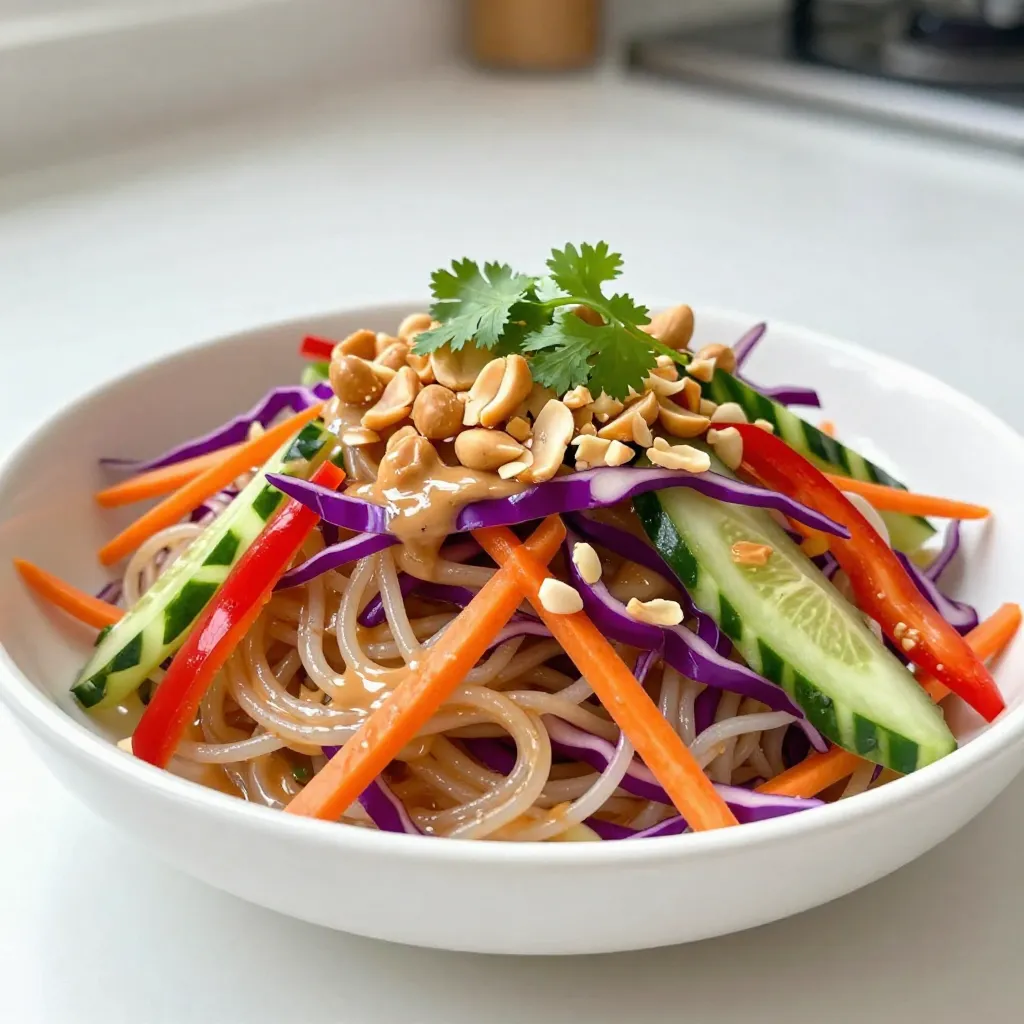
Welcome to flavor town! Today, I’m excited to share my recipe for Thai Peanut Noodle Salad, a dish that’s both tasty and healthy. With its fresh veggies, creamy peanut sauce, and rice noodles, this salad is sure to impress. Whether you’re looking for a quick meal or a dish to impress guests, this salad fits the bill. Let’s dive into the delicious details and get started!
Why I Love This Recipe
- Fresh and Colorful: This salad is loaded with vibrant vegetables that not only look beautiful but also provide a variety of nutrients.
- Quick and Easy: With a prep time of just 15 minutes, this recipe is perfect for busy weeknights or a last-minute gathering.
- Deliciously Flavorful: The creamy peanut sauce adds a rich, savory flavor that perfectly complements the fresh veggies and noodles.
- Customizable: You can easily adjust the vegetables or spice level to suit your taste, making it a versatile dish.
Ingredients
Main Ingredients for Thai Peanut Noodle Salad
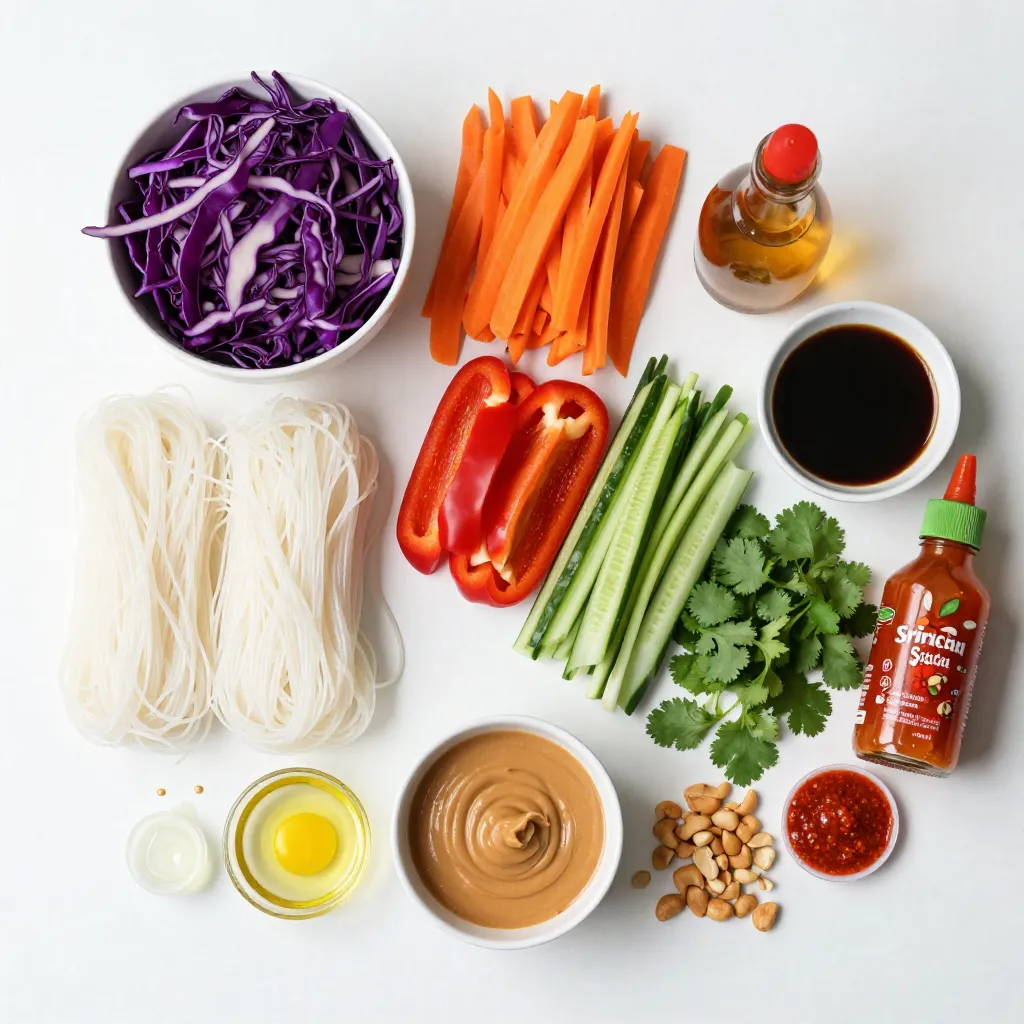
– 8 oz rice noodles
– 1 cup shredded purple cabbage
– 1 cup shredded carrots
– 1 red bell pepper, thinly sliced
– 1/2 cup cucumber, julienned
– 1/4 cup green onions, sliced
– 1/4 cup fresh cilantro, chopped
– 1/4 cup roasted peanuts, chopped
Thai Peanut Noodle Salad starts with rice noodles. They are light and soak up flavors well. You can find them in most grocery stores. Fresh vegetables add crunch and color. Shredded cabbage and carrots bring a nice bite. Sliced bell pepper and cucumber keep it refreshing. Green onions and cilantro give it a bright taste. Chopped roasted peanuts add a tasty crunch on top.
Ingredients for Peanut Sauce
– 1/3 cup creamy peanut butter
– 2 tablespoons soy sauce
– 1 tablespoon maple syrup
– 1 tablespoon rice vinegar
– 1 teaspoon sesame oil
– 1-2 teaspoons Sriracha (to taste)
– Water (to thin the sauce)
The peanut sauce is the star of this dish. Creamy peanut butter gives it richness. Soy sauce adds a salty, umami flavor. Maple syrup brings sweetness that balances the salt. Rice vinegar adds tang, while sesame oil gives depth. Sriracha can bring a kick, so adjust it to your taste. If the sauce is too thick, add water until it’s just right.
Optional Ingredients for Customization
– Additional veggies
– Extra spices
– Protein add-ins
Feel free to customize your salad! You can add more veggies like snap peas or broccoli. Extra spices can enhance the flavor, such as garlic or ginger. If you want protein, consider adding grilled chicken, shrimp, or tofu. This makes the salad more filling and satisfying. Personalize it to suit your taste!
Step-by-Step Instructions
Cooking the Rice Noodles
1. Start by boiling water in a large pot. Make sure it bubbles well.
2. Add 8 oz of rice noodles to the boiling water. Cook them according to the package instructions.
3. Once they are al dente, drain the noodles in a colander. Rinse them under cold water. This stops the cooking and cools them down. Set the noodles aside for later.
Preparing the Vegetables
1. Grab a large mixing bowl. Add 1 cup of shredded purple cabbage, 1 cup of shredded carrots, 1 thinly sliced red bell pepper, 1/2 cup of julienned cucumber, 1/4 cup of sliced green onions, and 1/4 cup of chopped fresh cilantro.
2. Use a large spoon to toss the veggies together. Make sure they mix evenly. This step adds color and crunch to your salad.
Making the Peanut Sauce
1. In a small bowl, whisk together 1/3 cup of creamy peanut butter, 2 tablespoons of soy sauce, 1 tablespoon of maple syrup, 1 tablespoon of rice vinegar, and 1 teaspoon of sesame oil.
2. Add 1-2 teaspoons of Sriracha for some heat. If the sauce is too thick, add a teaspoon of water at a time until it reaches the right consistency. You want it smooth, not runny.
Combining and Serving
1. Now, add the cooled rice noodles to the bowl with the veggies.
2. Pour the peanut sauce over the noodle and vegetable mix. Toss everything gently until the noodles and veggies are well coated.
3. For serving, transfer the salad to large bowls or a platter.
4. Sprinkle chopped roasted peanuts on top for added crunch. You can also garnish with extra cilantro and lime wedges for a fresh touch.
Tips & Tricks
Perfecting the Peanut Sauce
To adjust the flavor, start with the basics. You can add more soy sauce for saltiness or maple syrup for sweetness. If you want a kick, increase the Sriracha. Taste your sauce as you mix. This helps you find the right balance.
For thickening or thinning, if your sauce is too thick, add water. Do this one teaspoon at a time. Stir well after each addition. If it’s too thin, add more peanut butter. This will give it a nice creamy texture.
Noodle Cooking Tips
For the right texture, cook rice noodles until they are al dente. This means they should still have a little bite. Overcooking can make them mushy. Rinse them under cold water right after draining. This stops the cooking and helps them stay firm.
Common mistakes include not watching the cooking time and skipping the rinse. Always follow the package instructions. If you forget to rinse, the noodles can stick together.
Salad Storage Tips
To keep your salad fresh, store it in an airtight container. This helps keep the veggies crisp. You can separate the peanut sauce and noodles if you want to keep them fresh longer.
For reheating, avoid microwaving the salad as it can make the veggies soggy. Instead, heat the noodles with a little water in a pan. This will warm them without losing crunch.
Pro Tips
- Perfectly Cooked Noodles: To avoid mushy noodles, make sure to cook the rice noodles until just al dente and rinse them in cold water immediately after draining. This stops the cooking process and keeps them firm.
- Customize Your Veggies: Feel free to swap or add any vegetables you like! Bell peppers, snap peas, or even edamame can add great flavor and texture to your salad.
- Make It Ahead: This salad can be prepared in advance! Just keep the peanut sauce separate until you’re ready to serve to prevent the noodles from soaking up too much moisture.
- Extra Crunch: For an added crunch, try topping the salad with toasted sesame seeds or additional chopped peanuts before serving.
Variations
Vegetarian and Vegan Options
You can easily make this dish vegetarian or vegan.
– Substitutions for non-vegan ingredients: Use maple syrup in place of honey. This keeps the sweetness without animal products.
– Adding plant-based proteins: Try chickpeas or tofu for protein. They blend well with the noodles and veggies.
Gluten-Free Adaptations
If you need a gluten-free dish, there are great options.
– Alternative noodles: Use rice noodles, which are already gluten-free. You can also try quinoa noodles for a different taste.
– Gluten-free condiments: Choose gluten-free soy sauce or tamari. This keeps the flavors strong without gluten.
Flavor Variations
You can change up the taste to suit your mood.
– Spicy version ideas: Add more Sriracha or red pepper flakes for heat. This gives the salad a nice kick.
– Alternative sauces to try: Experiment with almond butter or sunflower seed butter instead of peanut butter. Each will give a unique flavor twist.
Storage Info
How to Store Leftovers
To keep your Thai Peanut Noodle Salad fresh, use an airtight container. This helps lock in moisture and flavor. You can store it in the fridge for up to three days. Always check for any signs of spoilage before eating.
Freezing Options
Can you freeze the salad? Yes, but it’s best to freeze just the noodles and sauce separately. Freezing the veggies can make them mushy. For freezing, place the noodles and sauce in freezer bags. Squeeze out as much air as possible. When you are ready to eat, thaw them in the fridge overnight.
Best Ways to Use Leftovers
Now that you have leftovers, let’s get creative! You can mix the salad into a stir-fry for a new dish. Add some protein like chicken or tofu for a hearty meal. You can also use it as a filling for wraps or lettuce cups. This way, you can enjoy the flavors in different ways.
FAQs
What can I substitute for rice noodles?
You can use several alternatives for rice noodles. Here are a few options:
– Soba noodles: Made from buckwheat, these give a nice flavor.
– Whole wheat spaghetti: This is a good pantry-friendly choice.
– Zucchini noodles: Great for a low-carb option; use a spiralizer.
– Shirataki noodles: These are very low in calories and carbs.
These substitutes can work well, but adjust the cooking time as needed.
How long does Thai Peanut Noodle Salad last in the fridge?
Thai Peanut Noodle Salad can last in the fridge for about 3 to 5 days. Store it in an airtight container. Over time, the veggies may get softer, so enjoy it fresh for the best taste.
Can I make the salad ahead of time?
Yes, you can make this salad ahead of time. Here are some tips:
– Prep the noodles and veggies: Cook and chop them a day before.
– Make the peanut sauce: It keeps well in the fridge. Just mix it in before serving.
– Store separately: Keep noodles, veggies, and sauce apart until you are ready to eat. This keeps everything fresh and crunchy.
In this article, I covered how to make a tasty Thai Peanut Noodle Salad. We explored key ingredients like rice noodles, fresh veggies, and a creamy peanut sauce. I shared step-by-step instructions and helpful tips for perfecting your dish. You can customize it with extra ingredients or try unique variations. Remember, you can store leftovers or use them in new ways. Enjoy crafting your salad, and don’t be afraid to experiment with flavors. Your kitchen is a great place for creativit